

Buyer's Guide: Brake Calipers
6 min read
RideBuilder
Brake Caliper Buyer's Guide
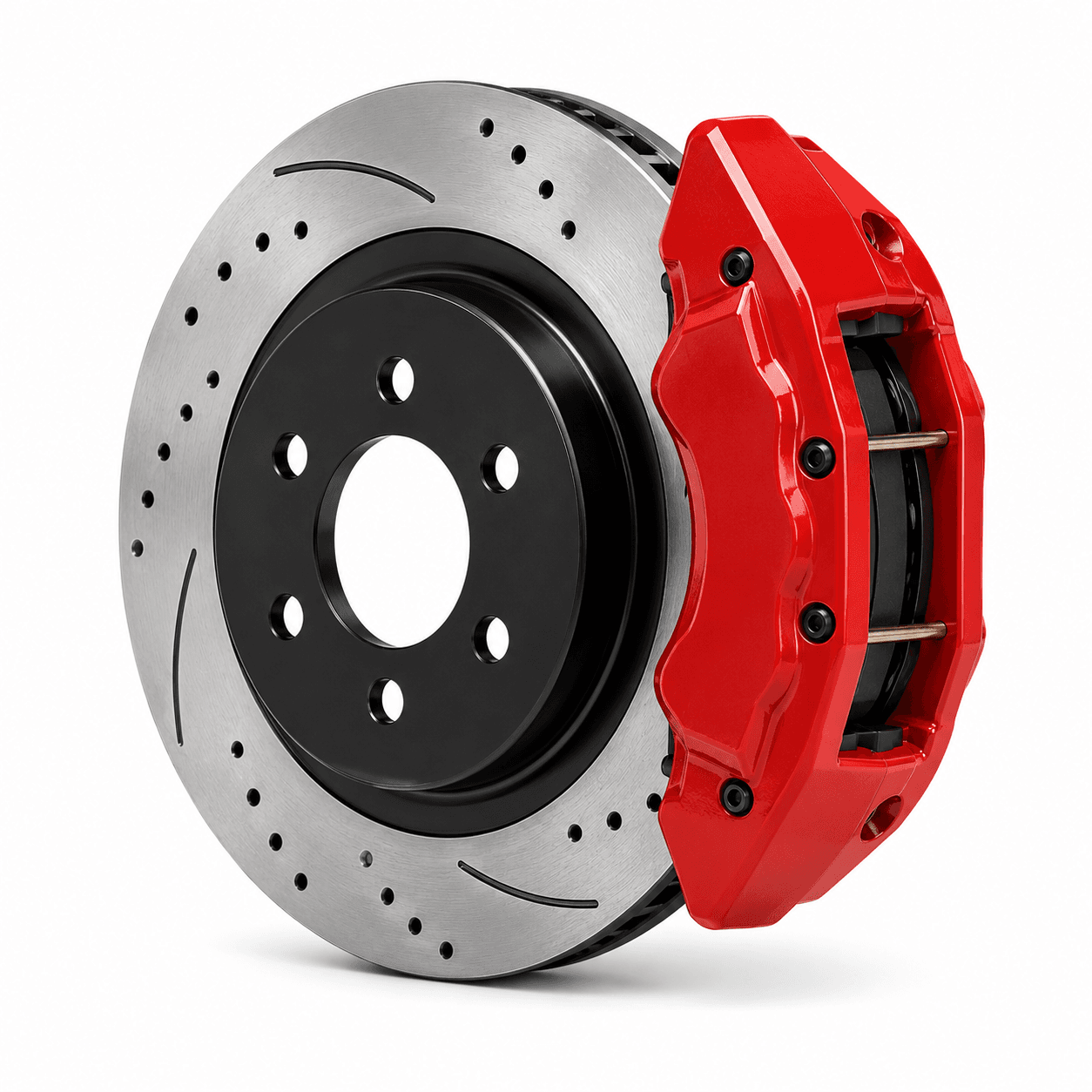
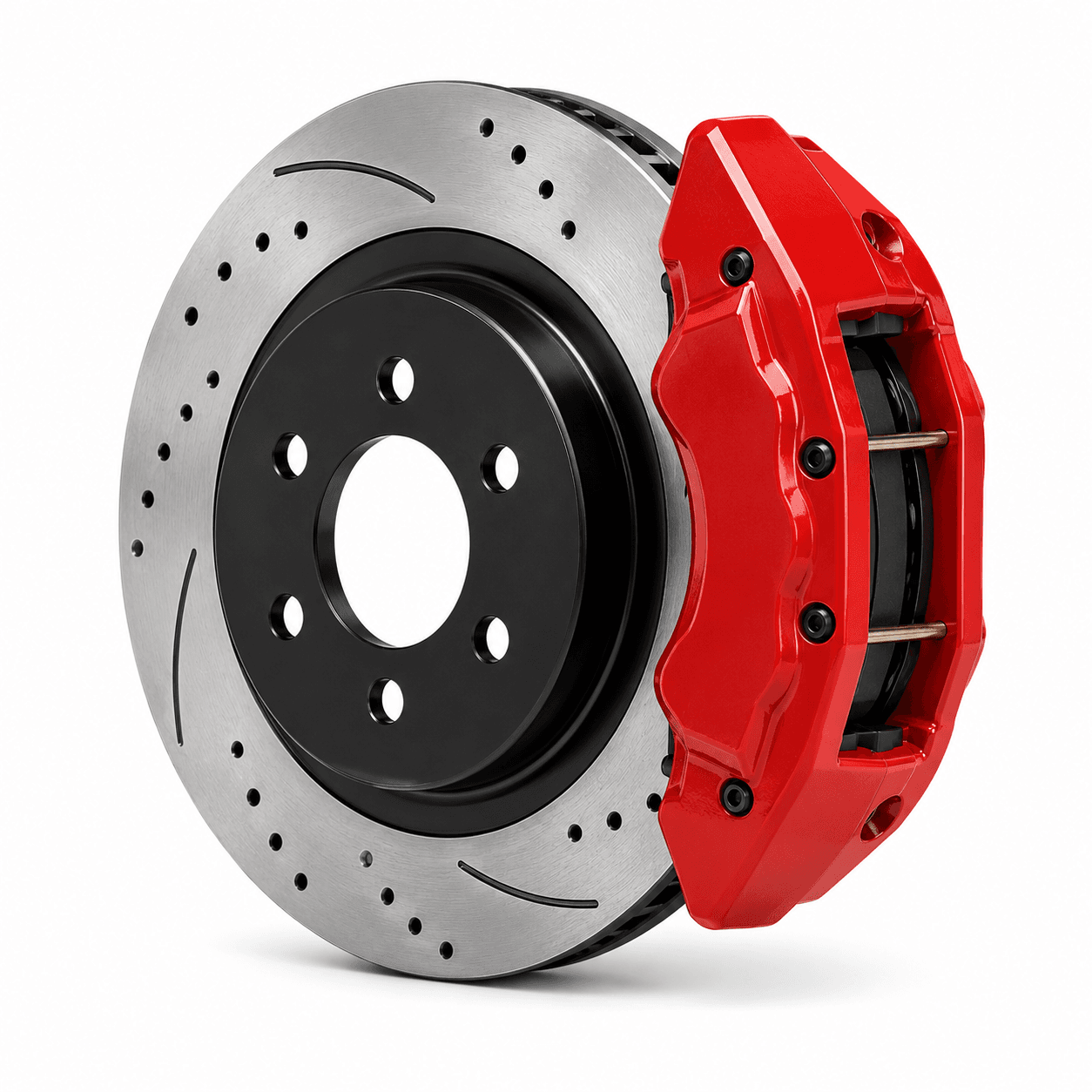
The brake caliper is the component that converts hydraulic pressure into braking force at the wheel. When supplied with pressurized brake fluid, the caliper responds by pressing its pistons outward, squeezing the brake pads against the rotor and creating the friction that slows the vehicle. This guide is complementary to the brake rotor guide which can be found here. This guide covers how calipers work, what specifications matter, common misconceptions, and what to verify before purchasing.
How Brake Calipers Work
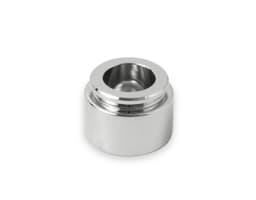
Inside every caliper are one or more pistons driven by hydraulic pressure. The amount of clamping force that a brake caliper generates depends on the brake fluid pressure, the number of pistons, and the size of each piston.
There are two fundamental caliper designs:

Floating Calipers have pistons on one side only. When the pistons extend, the caliper body slides on the guide pins to press the opposite pad against the rotor. Floating calipers are the standard design on most passenger vehicles because they are compact, cost-effective, and perfectly adequate for street use. Their sliding mechanism, however, introduces flex under hard braking which can reduce braking precision.